Business
Your ERP and your shop don't talk: what it really costs
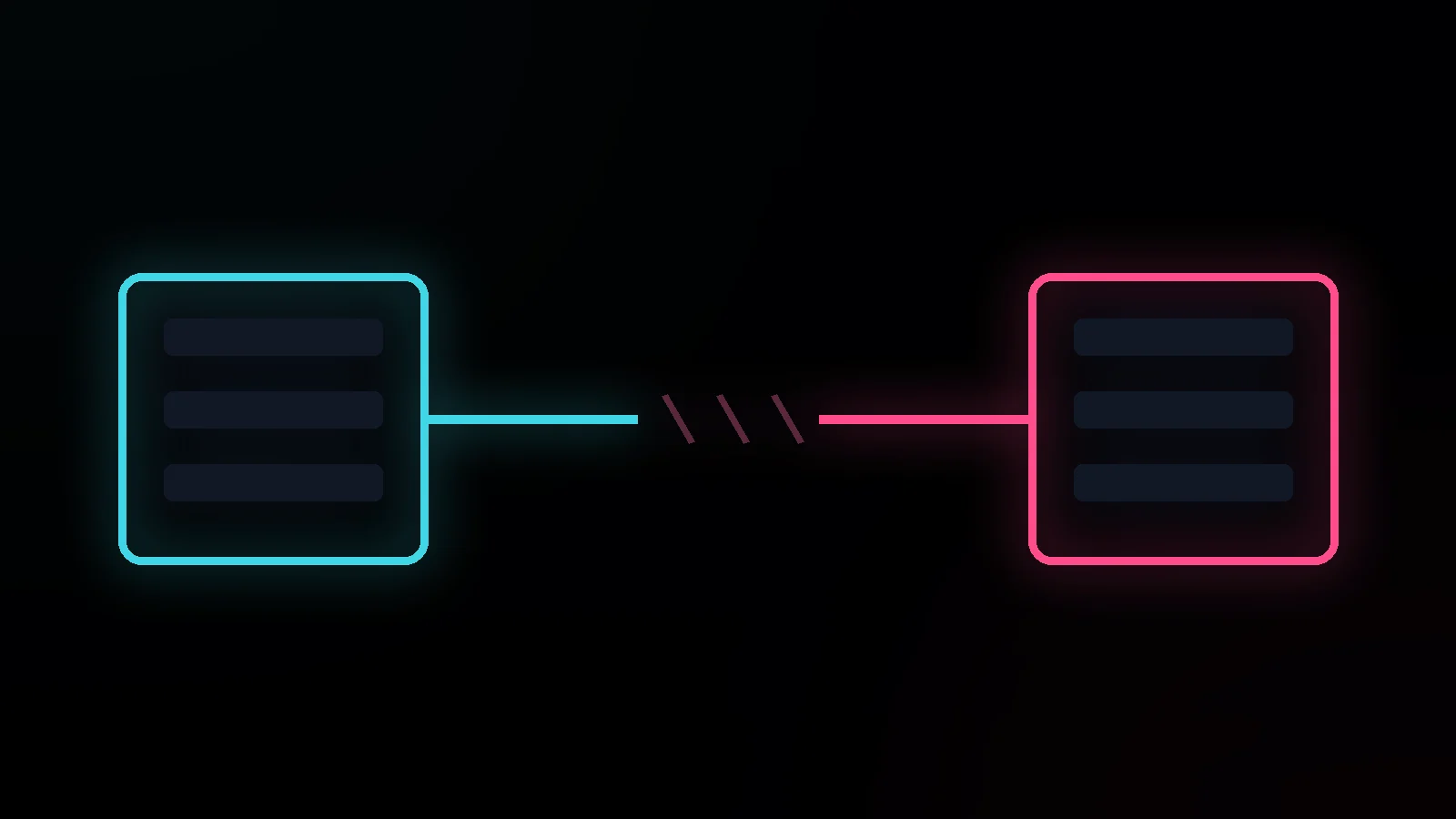
When the business system and the online shop don't communicate, someone re-keys orders by hand and stock levels lag. The cost is paid in hours, mistakes and sales of out-of-stock goods. Connecting them doesn't mean replacing them: it means deciding which system owns each piece of data, and building a bridge that holds when one side goes quiet.
There is a scene we have watched in dozens of companies. An order comes in from the website. Someone opens it, reads it, and types it into the business system. Then checks whether the product is actually there, because the stock figure online is stuck at yesterday evening. If it isn't, they phone the customer.
Nobody calls this an IT problem: they call it "order entry". And it is a paid person doing, every day, the work two systems should do by themselves in half a second.
The bill, in numbers you can work out tonight
Take three lines and multiply. No analysis needed: a sheet of paper and five minutes.
- Entry time. Minutes per order × orders per day × working days. At four minutes and thirty orders a day that is over five hundred hours a year: one person for three months.
- Typing mistakes. Wrong quantities, imprecise addresses, a similar but not identical item. Each one costs a shipment, a return or a phone call.
- Selling what isn't there. The most expensive line and the least counted: the customer has bought, you have to cancel. Statistically, that customer does not come back.
There is a fourth line that isn't measured but is felt: nobody trusts the numbers. If online stock and system stock never agree, decisions get made on instinct even when the data exists.
Two systems that don't talk are not two tools: they are two versions of the truth, and one of them is wrong.What we say in the first meeting
The question that comes before all others: who owns it?
Connecting two systems is not technical work: it is decision work. And the main decision is, for every piece of information, which system is the source of truth.
Usually: stock is owned by the business system, prices depend (price list from the system, promotions from the shop), the customer record belongs to whoever saw them first, orders are born on the site and live in the system. There is no universally right answer — there is the right answer for how you work, and it must be written down before anything is touched.
When that decision isn't taken, the integration takes it for you: last writer wins, and nobody can explain any more why a price changed.
What must happen when one side goes quiet
A link between two systems doesn't fail when one of them returns an error: it fails when one answers "fine" and does nothing, or when the same order arrives twice because the first attempt succeeded but the confirmation was lost.
The three properties that make an integration dependable are always the same:
- Repeatable without harm. If the same order arrives twice it must be recognised as the same order, not created twice.
- Retries and gives up. If the system is down for maintenance the order waits in a queue and retries with growing backoff — but after a number of attempts it stops and tells a person.
- Watched. An integration that stops silently is worse than none: nobody re-keys by hand any more, and nobody knows the flow has stopped. The alert goes to someone's phone, not to a log nobody reads.
How long it takes, in practice
It depends almost entirely on one thing: what the business system exposes. With a modern system with documented interfaces, connecting orders and stock is a matter of weeks. With a closed or very old one you go other ways — scheduled exports, watched folders, sometimes direct database access — and it is still nearly always feasible, just less elegant.
What you almost never need is to replace one of the two systems to make them talk. It is the most expensive proposal and the least justified: replacing a business system is a decision taken on its own merits, not to solve a connection problem.
Where to start
Not with everything at once. The order we recommend, by decreasing value:
- Stock from the system to the shop, even every fifteen minutes: it removes out-of-stock sales at a stroke.
- Orders from the shop to the system: the line that frees the most hours.
- Status and tracking back to the customer: it cuts the calls asking where the parcel is.
- Customer records and price lists, last: the most delicate and the least urgent.
If there is a person in your company who "handles the website orders", you already have the number to start from: their hours. The rest of the reasoning follows.